Apuan Alps Heritage Collection
CALACATTA CARRARA
The epitome of classic luxury. Calacatta Carrara distinguishes itself with a warm, luminous
white background swept by bold, broad grey veins. It bridges the gap between the delicate
subtlety of Bianco Carrara and the dramatic intensity of Statuario, making it a perennial favorite.
01. ORIGIN
The Exclusive Basins
True Calacatta is rarer than standard Carrara marble. It is extracted from specific fault lines
within the Apuan Alps where unique geological conditions allowed for the formation of large,
undisturbed white calcitic islands separated by distinct, wide mineral veins.
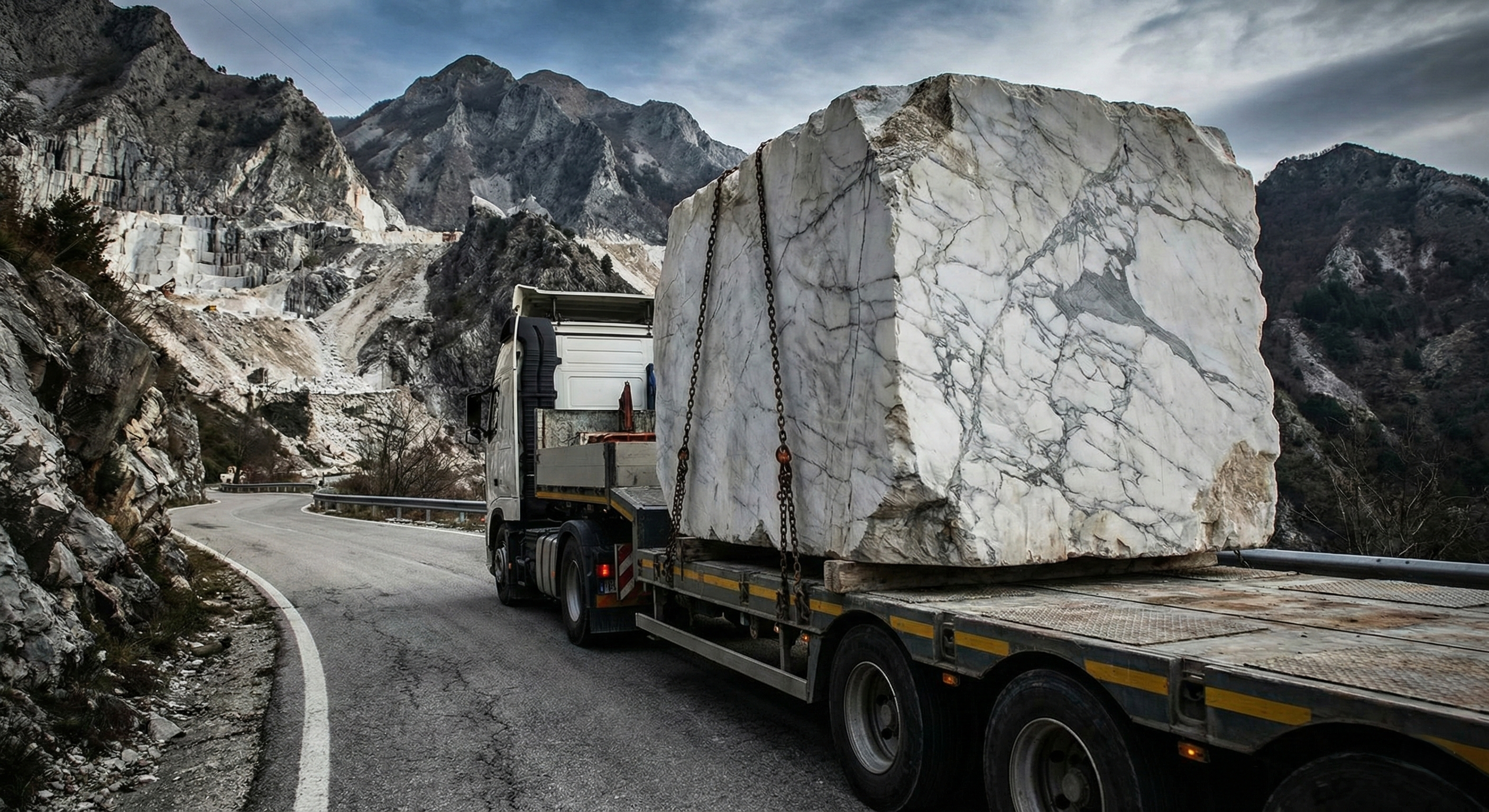
ORIGIN - High-Altitude Quarries
02. MATERIAL
Sweeping Veins
The beauty of Calacatta Carrara lies in its scale. The veins are not merely lines, but thick,
flowing ribbons of grey and soft taupe that create a striking visual rhythm. This large-scale
pattern requires highly skilled block selection to ensure maximum aesthetic yield.
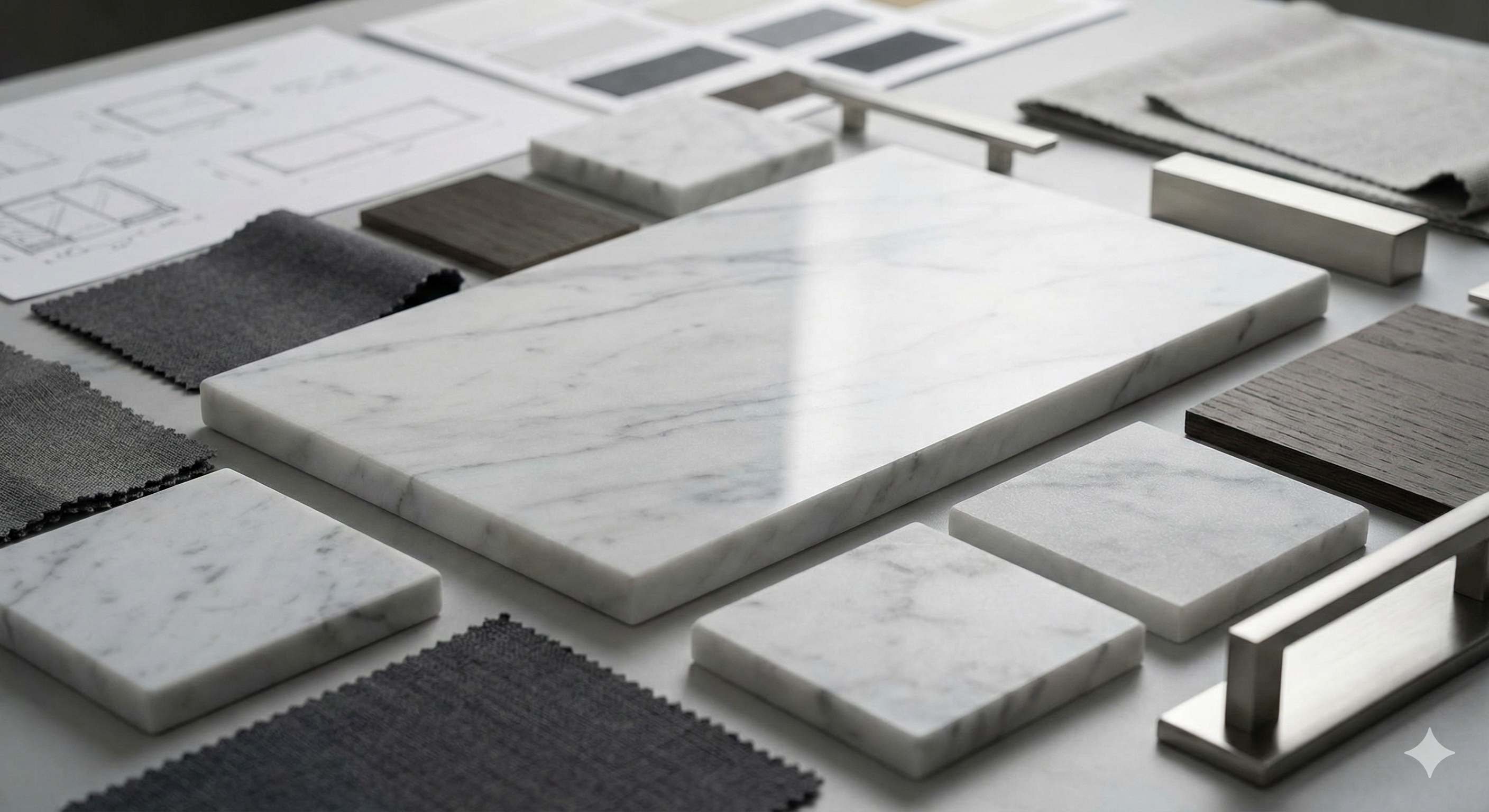
MATERIAL - Elegant Ribbon Veining
03. DESIGN
Bespoke Interiors
Calacatta Carrara is the ultimate material for high-end residential design. It is universally
specified for expansive kitchen islands, seamless backsplashes, and luxurious master bathrooms,
providing a bright, airy atmosphere anchored by sophisticated organic patterns.
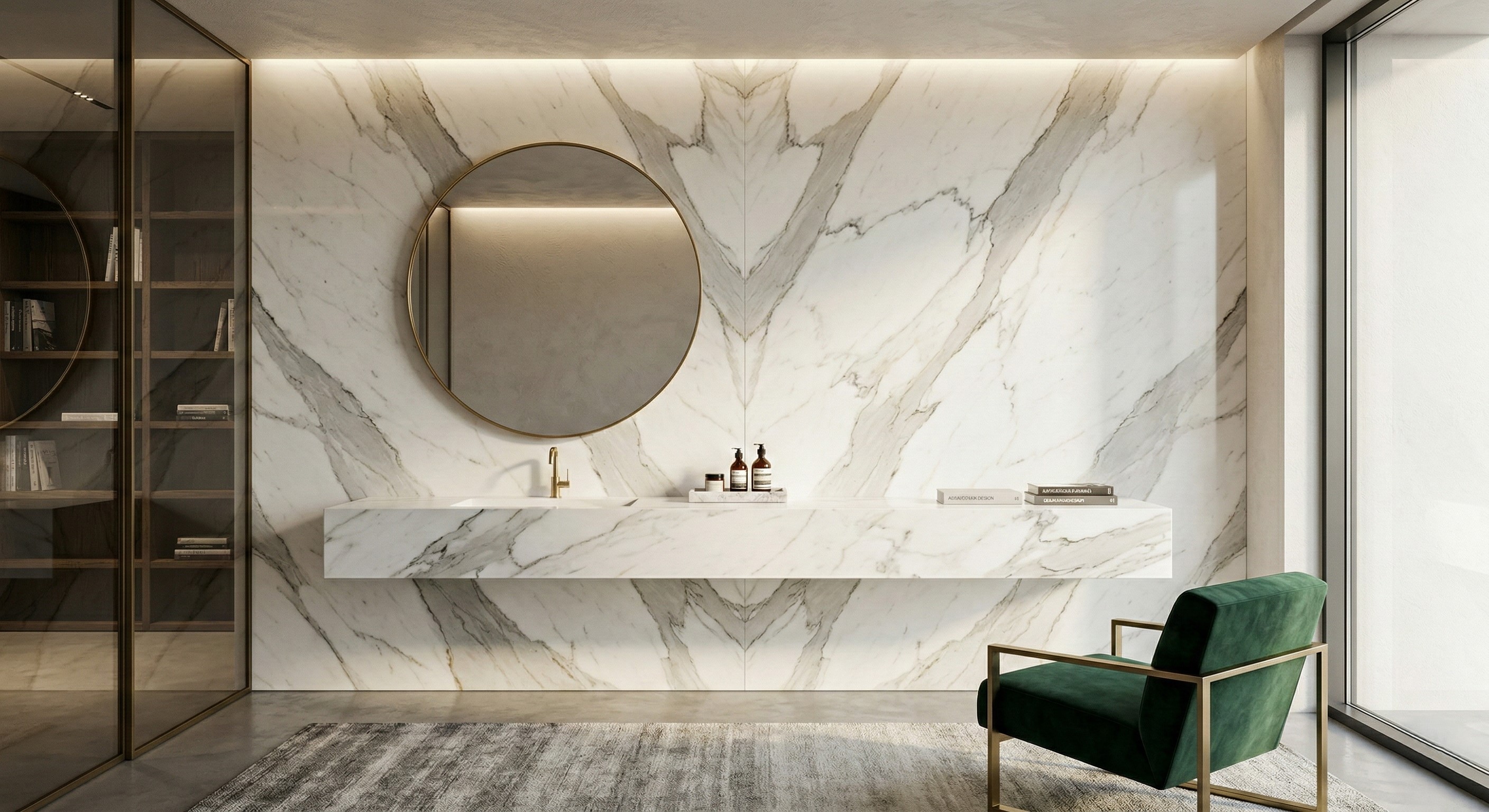
DESIGN - Timeless Residential Architecture
04. ART
Sculptural Volumes
Beyond flat surfaces, the compact crystalline nature of Calacatta makes it perfect for dimensional works.
We carve solid blocks into breathtaking, monolithic freestanding bathtubs and bespoke vanities
where the sweeping veins can be appreciated in three dimensions.
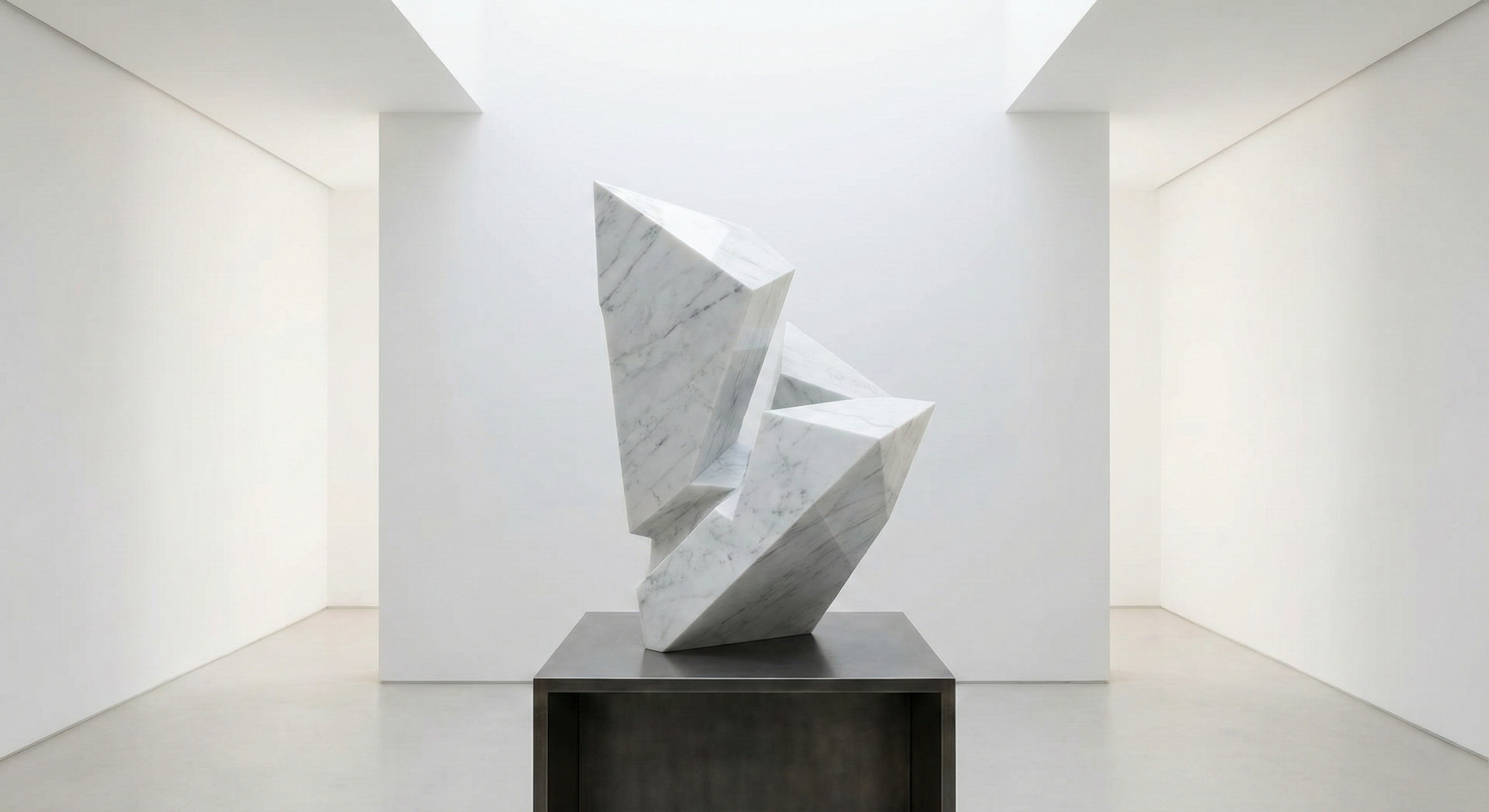
ART - 3D Sculptural Elegance
Calacatta Carrara - Technical & Professional FAQ
01. What defines Calacatta Carrara?
It features a warm, bright white background interspersed with bold, sweeping grey veins that are wider than those found in standard Bianco Carrara.
02. Calacatta Carrara vs Bianco Carrara?
Bianco Carrara has a more uniform, feathery grey distribution. Calacatta has much larger areas of pure white broken up by dramatic, thick grey veins.
03. Calacatta Carrara vs Calacatta Oro?
Both share the dramatic vein structure, but Calacatta Carrara has predominantly grey/taupe veins, whereas Oro features distinct honey-gold mineralization.
04. Calacatta vs Statuario?
Statuario has a colder, icier white base with dark grey veins. Calacatta has a slightly warmer white base and its veins can have soft taupe undertones.
05. Why is Calacatta so highly valued?
Its unique combination of large white spaces and bold veins is rare in nature, making it highly prized for luxury, high-contrast interior design.
06. Where is it extracted?
It is quarried exclusively in the Apuan Alps marble basin in Carrara, Italy.
07. Are all Calacatta slabs similar?
No, Calacatta is highly variable. Some blocks feature wide ribbons, while others have a more fractured, brecciated look.
08. Can it have brownish spots?
Yes, slight taupe or faint brownish hints near the grey veins are a natural characteristic of authentic Calacatta.
09. Is it translucent?
In thinner slabs (around 1cm), the pure white areas offer a beautiful, soft translucency, though the dense grey veins block light.
10. Does it increase real estate value?
Significantly. It is universally recognized as a premium upgrade in kitchens and master bathrooms, adding major resale value.
11. What is its Mohs hardness?
It is a standard calcitic marble, ranking between 3 and 4 on the Mohs hardness scale.
12. Is it porous?
Yes. While dense, it has microscopic pores and must be treated with an impregnating sealer to prevent liquid absorption.
13. Does it resist heat?
Marble is extremely heat resistant, making Calacatta an excellent and safe choice for luxury fireplace surrounds.
14. Standard slab thicknesses?
We provide slabs in 20mm and 30mm. Custom blocks can be ordered for massive 3D carving.
15. What is the difference between Polished and Honed?
Polished is highly reflective and deepens the vein colors. Honed is a matte, silky finish that feels more modern and hides wear better.
16. Can it be used outdoors?
It is generally not recommended for exterior use in cold climates, as freeze-thaw cycles and acid rain can damage its surface.
17. Is it suitable for underfloor heating?
Yes, its excellent thermal mass ensures comfortable and efficient heat distribution in modern homes.
18. Does it scratch easily?
It can be scratched by heavy iron or steel items. We recommend using cutting boards in kitchens to protect the surface.
19. Can it be bookmatched?
Yes, Calacatta is one of the most popular stones for bookmatching. Its bold veins create stunning mirrored butterfly effects.
20. What is the weight per square meter?
A 20mm thick slab weighs approximately 55 kg per square meter.
21. Is it the best choice for kitchens?
Aesthetically, yes. Functionally, owners must be aware it will etch from acids (like lemon or wine) and requires diligent care.
22. What is etching?
Etching is a chemical reaction where acid dissolves the polish, leaving a dull mark. A honed finish makes etching far less visible.
23. Best metals to pair with Calacatta?
Polished nickel, brass, and matte black hardware all contrast beautifully with its warm white and grey tones.
24. Wood pairings?
Warm woods like European Oak or deep Walnut highlight the slight warmth in Calacatta's white base perfectly.
25. Suitable for shower walls?
Absolutely. Large format slabs minimize grout lines and create a seamless, high-end spa aesthetic.
26. Suitable for shower floors?
For floors, it must be cut into smaller mosaics or finished with a honed/sandblasted texture to ensure slip resistance.
27. Can it be used for a monolithic sink?
Yes, its structural density allows us to carve solid, heavy-duty vanities and bathtubs directly from blocks.
28. What edge profile looks best?
A "Mitered Drop" edge (creating the illusion of a thick 5-10cm block) is highly popular for modern kitchen islands.
29. Can it be used on luxury yachts?
Yes. We reduce the slab thickness to 5mm and adhere it to an aluminum honeycomb backing to meet marine weight limits.
30. How to ensure veins match at the seams?
Our factory conducts a full "Dry-Lay", mapping the exact cut of every slab to ensure the veins flow continuously across your kitchen.
31. How to clean Calacatta daily?
Use warm water and a dedicated pH-neutral stone cleaner with a soft microfiber cloth. Avoid all harsh chemicals.
32. How often should I seal it?
For kitchens and master baths, we recommend professional re-sealing every 12 months to maintain maximum protection.
33. Can etching and scratches be fixed?
Yes, one of the benefits of natural marble is that a professional restorer can easily re-hone or re-polish the surface in your home.
34. Which adhesive is mandatory?
Installers MUST use a premium, rapid-setting WHITE thin-set. Grey adhesives will bleed through and darken the white marble.
35. What color grout should be used?
A non-sanded white or light grey grout is recommended to blend seamlessly with the stone without scratching the edges.
36. Can I see my exact slabs before shipping?
Yes. Because Calacatta varies wildly, we require clients to approve high-resolution photos of their specific lot before fabrication.
37. How is it shipped internationally?
Finished pieces are packed in heavy-duty, fumigated ISPM-15 wooden crates with dense foam padding for safe ocean freight.
38. Is the material sustainably sourced?
Yes, extraction complies with strict Italian environmental regulations regarding water recycling and landscape restoration.
39. Standard lead times?
From slab selection and drawing approval to export packing, the typical lead time is 8 to 10 weeks.
40. How to request a project estimate?
Email your architectural drawings (DWG/PDF) and desired finishes to info@marmidicarrara.com for a comprehensive quote.